
The best way to choose a frequency converter manufacturer is to evaluate technical fit, verify factory credentials, compare total cost of ownership, and test communication before committing to production. Start by documenting your voltage, frequency, load, and environmental requirements. Then screen manufacturers for relevant product experience, ISO-certified quality systems, real production facilities, and export references. Finally, compare pricing, lead times, customization capability, and after-sales support using a weighted scorecard rather than unit price alone.
What if the lowest quote costs you three times more than the highest one? Last year, a procurement team in Brazil selected a frequency converter supplier based on a 22% price advantage. Within eight months, harmonic distortion from poorly tuned units damaged nearby control equipment, replacement parts took eleven weeks to arrive, and the project missed its commissioning deadline. The “savings” disappeared in penalties and rework.
This guide gives you a practical framework for how to choose a frequency converter manufacturer without repeating that mistake. Whether you need one custom unit or a long-term OEM partnership, these steps help you find a reliable frequency converter supplier who can deliver on spec, on time, and on budget.
Key Takeaways
- Document input voltage, output frequency, load profile, and environmental conditions before contacting any manufacturer.
- Factory verification matters: 30-40% of online equipment sellers are trading companies, not manufacturers.
- Certifications like ISO 9001, CE, and IEC 61000 should be verified through the issuing registrar, not accepted from brochures.
- Total cost of ownership over 10 years often reverses apparent price advantages from the cheapest quote.
- After-sales support, spare parts availability, and engineering response time determine long-term value more than catalog specifications.
Define Your Application Requirements First
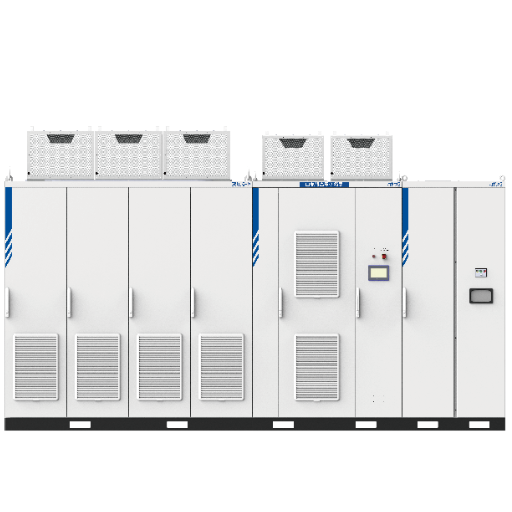
Before you evaluate a single frequency converter manufacturer, write down exactly what you need. Vague requirements lead to vague quotes, and vague quotes lead to mismatched equipment.
Input and Output Specifications
Record your grid voltage, frequency, and number of phases. Then define the required output: voltage range, frequency range, and phase configuration. A 50 Hz to 60 Hz converter for export equipment has very different design requirements than a 400 Hz aviation ground power unit. If your specification includes 400 Hz output for aerospace or military test applications, see our 400 Hz frequency converter solutions designed for ground power and avionics testing. If you need multiple output channels or voltage/frequency combinations, note them now.
Load Characteristics
List the load type, power rating in kW or kVA, starting current, power factor, and duty cycle. Motor loads, resistive loads, and nonlinear loads behave differently. A VFD for a pump requires different protection settings than a static converter for a test bench. Include any harmonic limits or power quality standards the load demands.
Environmental and Installation Conditions
Ambient temperature range, altitude, humidity, dust, and vibration all affect converter design. Outdoor installations need IP54 or higher enclosures. Marine environments need corrosion protection. High-altitude sites require derating because air cooling becomes less effective. If you skip these details, you may receive equipment rated for an office instead of your factory floor.
When Ahmed, a project engineer in Saudi Arabia, sourced converters for a desert pumping station, he initially sent only voltage and power ratings. The first proposal used standard IP20 enclosures with passive cooling. At 50°C ambient, those units would have tripped on thermal overload within hours. After he added environmental requirements to his specification, the manufacturer proposed forced-air cooling, dust filters, and a sun-shielded outdoor cabinet. The revised design cost 12% more upfront but eliminated field failures.
Build a Shortlist of Verified Manufacturers
Once your requirements are clear, create a list of 5-10 potential suppliers. Then verify each one before requesting detailed quotations.
Where to Find Candidates
Industry directories, trade show exhibitor lists, and LinkedIn company pages are useful starting points. For buyers considering a China frequency converter manufacturer, regional clusters offer clues: Shandong and Jiangsu specialize in static and aviation frequency converters, Zhejiang and Guangdong focus on industrial VFDs, and Shanghai tends toward precision and high-frequency designs.
Factory Verification Checklist
Use this checklist to separate real manufacturers from trading companies. When evaluating a China frequency converter manufacturer, request a business license with manufacturing in the scope, and verify the address using Baidu Maps or satellite imagery.
- Request a business license and check that manufacturing appears in the business scope.
- Ask for factory photos with identifiable details such as signage, equipment models, or employee uniforms.
- Schedule a live video call from the production floor, not just a conference room.
- Verify the address using Google Maps, Baidu Maps, or satellite imagery.
- Request references from export customers in your region and contact at least two.
- Ask specific technical questions and evaluate whether answers come directly from engineers or through a relay.
Trading companies often use polished websites and generic product photos. Real manufacturers can show you SMT lines, transformer winding stations, burn-in racks, and test equipment. If a supplier refuses a virtual tour or gives vague answers about production capacity, treat that as a red flag.
Evaluate Technical and Engineering Capability
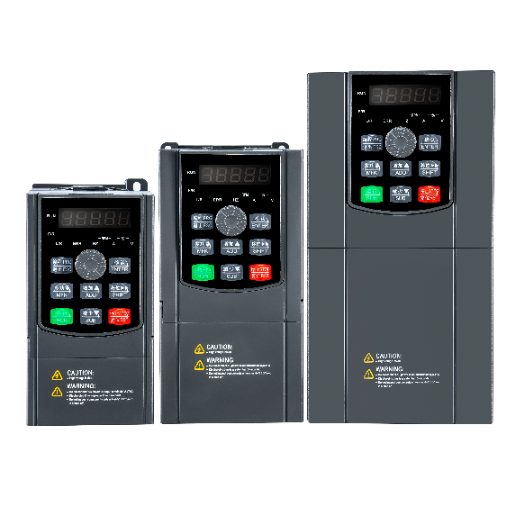
A frequency converter manufacturer should have direct experience with your application category. General experience is not enough. If you are an industrial frequency converter OEM seeking white-label or private-label partnerships, confirm that the manufacturer supports logo customization, editable documentation, and warranty transfer.
Product Range and Voltage Class
Ask for catalogs covering the product families you need: VFDs, static frequency converters, 400 Hz power supplies, or high-voltage converters. If your project spans multiple categories, a single-source supplier simplifies procurement and support.
Verify that the manufacturer has delivered units in your voltage class. Low-voltage VFD experience does not automatically translate to medium- or high-voltage design. For projects above 690 V, our high voltage frequency converter manufacturer guide explains the specialized engineering and safety certifications required at higher voltage classes.
For aviation and military buyers, 400 Hz output stability, transient response, and waveform quality are critical. For industrial motor control, vector control performance, communication protocols, and protection features matter more. A custom frequency converter manufacturer should ask detailed questions about your load profile before quoting.
Engineering Depth and Customization
Customization separates commodity suppliers from engineering partners. Ask how many custom designs the manufacturer completed in the past year. Request anonymized case studies. Find out how many engineers are on staff and what their qualifications are.
A strong manufacturer will not simply accept every specification. They will challenge unrealistic requirements, suggest alternatives, and explain trade-offs. That diagnostic conversation is one of the best signals of engineering competence.
If your project involves specialized voltage outputs, multi-phase configurations, or OEM branding, review our complete guide to frequency converter manufacturers for deeper supplier-type analysis.
Verify Quality Systems and Certifications
Certifications provide objective evidence that a frequency converter manufacturer follows documented processes. However, certificates can be misrepresented, so verification is essential.
Essential Certifications to Request
- ISO 9001: Demonstrates a documented quality management system. Verify the certificate scope includes design and manufacturing, not just sales.
- CE marking: Required for European market access. Covers the Low Voltage Directive and Electromagnetic Compatibility Directive for most frequency converters.
- IEC 61000: Covers EMC emissions and immunity. Critical for industrial environments where converters operate near sensitive control equipment.
- UL listing: Important for North American markets where inspectors and insurers often require third-party safety testing.
How to Verify Certificates
Request the certificate number and verify it through the issuing registrar’s online database. Confirm three things: the certificate is current, the scope covers your product category, and the company name matches exactly. Subsidiaries and parent companies are not interchangeable.
Also ask about internal testing protocols. Does the manufacturer run full-load burn-in on every unit? Do they perform incoming inspection on semiconductors and capacitors? Can they trace a failed unit back to a specific component lot and test operator? These operational details matter more than a wall of certificates.
The ISO 9001 standard provides a globally recognized baseline for quality management systems. You can learn more about it directly from the International Organization for Standardization.
Compare Customization, Pricing, and Lead Times
Price alone is a poor way to select a frequency converter partner. Use total cost of ownership and capability fit instead. Not every supplier is a true custom frequency converter manufacturer; some only offer catalog products with minor configuration changes.
Customization Capability
Not every project needs customization, but when it does, the manufacturer’s flexibility becomes decisive. Ask about prototype turnaround, MOQs for custom designs, and whether they provide documentation packages under your brand. For industrial frequency converter OEM programs, also confirm whether the manufacturer provides compliance documentation, editable manuals, and warranty transfer under your brand name. A reliable frequency converter supplier should offer:
- Custom voltage and frequency outputs
- Special enclosures and environmental protection
- Branded labels, manuals, and packaging
- Warranty terms transferable to your end customers
- Compliance documentation in your company name
Pricing Structure
Standard catalog units usually have the shortest lead times and lowest prices. Custom engineering adds non-recurring engineering costs and extends timelines. OEM branding requires minimum order quantities, often 50-100 units for small VFDs and 10-20 units for larger static converters or 400 Hz units.
Lead Time Expectations
Standard units from established manufacturers typically ship in 2-4 weeks. Custom configurations take 4-8 weeks. Fully custom designs requiring engineering development can take 8-16 weeks. European Tier-1 brands often require 8-16 weeks even for standard models due to longer supply chains.
When Lina, an OEM product manager in Germany, evaluated suppliers for a private-label industrial VFD line, she initially favored a supplier with 15% lower pricing. During due diligence, she discovered their quoted lead time was 14 weeks and they could not provide editable user manuals in German. A second supplier quoted 18% more but offered 6-week delivery, multilingual documentation, and lower OEM MOQs. Over the first year, faster restocking and better end-user support saved her company more than the price difference.
Test Communication and After-Sales Support
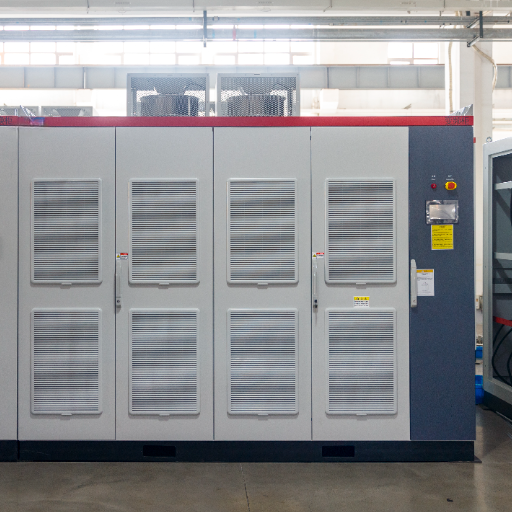
Long-term value depends heavily on how the manufacturer communicates and supports you after the sale.
Response Quality and Speed
Send a technical question before placing an order. Measure how long it takes to receive a clear, accurate answer. If the response is delayed, generic, or routed through multiple people, expect the same experience when a unit fails in the field.
Warranty and Spare Parts
Standard warranties in the industry range from 12 to 24 months. Clarify what the warranty covers, where spare parts are stocked, and what the typical repair timeline is. A reliable frequency converter supplier will honor claims without excessive documentation and will conduct root cause analysis on failures to prevent recurrence.
Technical Documentation
Request sample user manuals, wiring diagrams, and commissioning guides before ordering. Poor documentation increases installation risk and support burden. For OEM partnerships, confirm whether you receive editable source files for manuals and labels.
Communication Protocols
Establish a clear technical point of contact with direct engineering access. Document expected response times. Video calls and virtual factory tours help bridge time zones. The key is knowing exactly who to call and how quickly they will respond when something matters.
Use a Scorecard to Make the Final Decision
A weighted scorecard removes emotion from the selection process and forces disciplined comparison.
Sample Evaluation Criteria
| Criteria | Weight | Supplier A | Supplier B | Supplier C |
|---|---|---|---|---|
| Technical fit | 20% | |||
| Quality systems | 20% | |||
| Customization capability | 15% | |||
| Total cost of ownership | 15% | |||
| Lead time | 10% | |||
| After-sales support | 15% | |||
| Communication | 5% |
Score each supplier 1-5 in every category, multiply by weight, and sum the results. This method often reveals that the lowest-price supplier is not the best overall choice.
Common Mistakes to Avoid
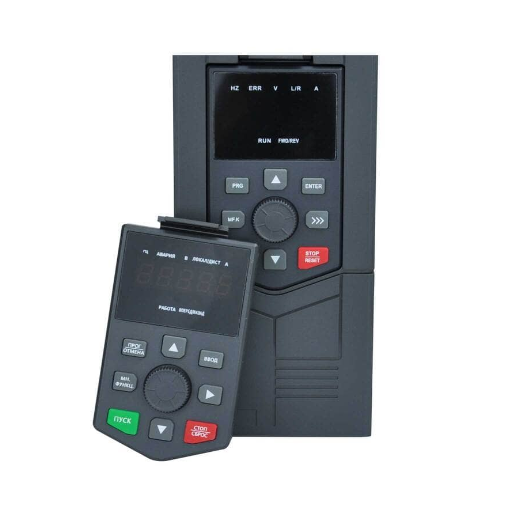
Even experienced buyers make these errors when choosing a frequency converter manufacturer.
Choosing on Price Alone
The cheapest quote rarely delivers the lowest total cost. Hidden costs include customs delays, warranty disputes, replacement parts, energy inefficiency, and lost production from downtime.
Skipping Factory Verification
Online presence is easy to fake. Factory ownership, testing capability, and engineering staff are not. A 30-minute video call can prevent months of problems. Do not select a China frequency converter manufacturer based only on platform ratings without verifying the actual facility.
Assuming Every Supplier Is a Custom Manufacturer
Many suppliers lack in-house engineering and simply resell standard units. Assuming every factory is a custom frequency converter manufacturer leads to disappointment when your project needs real design changes.
Ignoring Local Market Requirements
CE marking does not satisfy every country. UAE, Saudi Arabia, Russia, South Africa, and others have additional conformity requirements. Confirm your supplier understands your destination market.
Underestimating Documentation Needs
User manuals, wiring diagrams, compliance certificates, and test reports are not afterthoughts. Poor documentation creates installation delays and increases support costs.
Failing to Order Samples
Always evaluate sample units before volume orders. Test them under actual load and environmental conditions. A sample evaluation reveals issues that no catalog or specification sheet will show.
Conclusion
Learning how to choose a frequency converter manufacturer is one of the most valuable skills in industrial procurement. The right supplier, a reliable frequency converter supplier with verified factories, strong engineering, and responsive support, protects your project from downtime, rework, and hidden costs. The wrong supplier turns a simple equipment purchase into a long-term problem.
Whether you are a system integrator, distributor, or industrial frequency converter OEM, disciplined supplier evaluation protects your margins and your reputation.
Start with clear requirements. Verify factory ownership and certifications. Evaluate technical fit, customization capability, and total cost of ownership. Test communication before you commit. And always use a structured scorecard rather than instinct or price alone.
The global frequency converter market continues to grow as industrial automation expands, which means more suppliers are entering the field every year. Disciplined evaluation separates reliable partners from risky intermediaries.
Ready to choose a frequency converter manufacturer for your next project? Shandong Electric welcomes technical discussions, sample evaluations, and virtual factory tours. Contact our engineering team to share your specifications and receive a customized proposal designed around your exact requirements.
