
For most applications under 2,000 kVA, a static converter vs rotary converter decision favors static technology due to higher efficiency, lower maintenance, and a smaller footprint. However, rotary converters still win for very heavy surge loads, extremely dirty electrical grids, and certain legacy high-power installations above 5,000 kVA.
When facility manager Robert Okonkwo received three quotes for replacing his factory’s aging frequency conversion equipment, the prices seemed close. A 100 kVA static unit costs 32,000.Acomparablerotarysetcost32,000.Acomparablerotarysetcost38,000. The $6,000 difference looked trivial against a six-figure equipment budget. But Robert’s maintenance team knew better. Their existing rotary converters consumed bearings every eighteen months, required quarterly alignment checks, and ran so loudly that operators complained during night shifts. The real cost was hiding in the decade after purchase. This guide reveals those hidden costs with a neutral, numbers-driven comparison and a decision framework matched to your application.
Key Takeaways
- Static converters achieve 93-97% efficiency at rated load while rotary converters typically reach 80-92%, creating a significant energy cost gap over time.
- Over 10 years, a 100 kVA static converter costs approximately 61,980totalwhileanequivalentrotaryconvertercosts61,980totalwhileanequivalentrotaryconvertercosts137,530, a 55% difference.
- Rotary converters handle 300-500% surge capacity through mechanical inertia, making them preferable for very heavy motor direct-on-line starting.
- Static converters produce 55-65 dB noise versus 75-85 dB for rotary sets, a critical factor for airports, military bases, and indoor installations.
- Choose static for aviation, precision testing, and low-maintenance requirements. Choose rotary for heavy surge, dirty grids, and very high power above 5,000 kVA.
How Each Technology Works
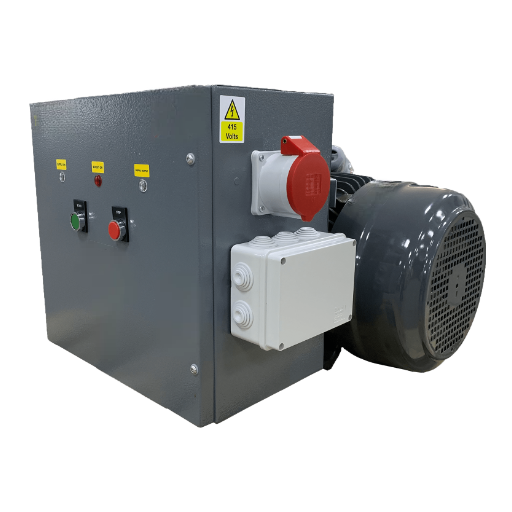
Understanding the fundamental difference between static and rotary frequency converters clarifies why each excels in specific scenarios.
Static Frequency Converters
A static frequency converter is an all-electronic power conversion system. It follows an AC-DC-AC architecture. Incoming AC power passes through a rectifier stage that converts it to DC. A DC link circuit smooths and stores this DC voltage. An IGBT-based inverter then switches the DC at high frequency to reconstruct the AC output at the desired frequency. Output filters remove switching noise before the power reaches the load.
There are no moving parts. No bearings spin. No brushes contact commutators. No couplings transfer torque. All conversion happens through semiconductor switching controlled by a digital signal processor. This design enables precise programming of output voltage, frequency, and phase balance. It also eliminates mechanical wear as a failure mode.
Want the technical details? Our deep-dive on solid state frequency converter working principle breaks down the rectifier, IGBT, and PWM stages component by component.
Rotary Frequency Converters
A rotary frequency converter is essentially a motor-generator set. An electric motor runs at the input frequency, typically 50Hz or 60Hz. This motor is mechanically coupled to a generator wound to produce the desired output frequency. The mechanical coupling can be direct on a common shaft, through a gearbox, or via a belt drive.
The generator output is naturally sinusoidal because it is produced by electromagnetic induction in rotating windings. No electronic switching creates the output waveform. This natural sinusoidal output is one reason some applications still prefer rotary technology.
The rotating mass provides inherent inertia. When a heavy load suddenly demands a high inrush current, the spinning motor-generator set resists rapid deceleration. This inertia supplies surge capacity far beyond the steady-state rating, often 300-500% for several seconds. Static converters cannot match this without significant oversizing.
Side-by-Side Comparison
The following table compares the two technologies across every criterion that matters for specification decisions.
| Criteria | Static Converter | Rotary Converter |
|---|---|---|
| Moving parts | None | Motor, generator, bearings, coupling |
| Maintenance | Minimal (fans, filters, capacitors) | Regular (bearings, brushes, alignment) |
| Efficiency at full load | 93-97% | 80-92% |
| Efficiency at 25% load | 85-93% | 60-75% |
| Noise level | 55-65 dB | 75-85 dB |
| Vibration | Negligible | Continuous mechanical vibration |
| Surge capacity | 150-200% for 10-60 seconds | 300-500% for several seconds |
| Output frequency | Fully programmable | Typically fixed by winding design |
| Power range | 1 kVA to 2,000+ kVA | 10 kVA to 5,000+ kVA |
| Size (100 kVA) | ~0.8 m2 footprint | ~2.5 m2 footprint |
| Weight (100 kVA) | ~800-1,200 kg | ~2,000-3,500 kg |
| Initial cost | Lower per kVA in most ranges | Higher, plus maintenance infrastructure |
| Output THD | 1-3% with filtering | Naturally low, under 1% |
| Response time | Milliseconds | Seconds (mechanical inertia) |
| Parallel redundancy | Easy (modular units) | Difficult (separate units needed) |
| Environmental | No oil, no brushes, no wear debris | May require lubrication and brush replacement |
Efficiency Reality Check
Some rotary converter suppliers claim their products are “more efficient.” This claim is misleading. While a very large, well-designed rotary set might reach 92% at full load, static converters consistently achieve 94-97% across the same power range. The gap widens significantly at partial loads.
Most industrial installations do not run at 100% rated capacity continuously. A factory might average 50-75% load over a year. At 50% load, a static converter typically maintains 88-92% efficiency. A rotary converter at the same load point may drop to 70-80%. Over thousands of operating hours, this partial-load penalty becomes the dominant cost driver.
TCO Analysis: 10-Year Cost Worked Example
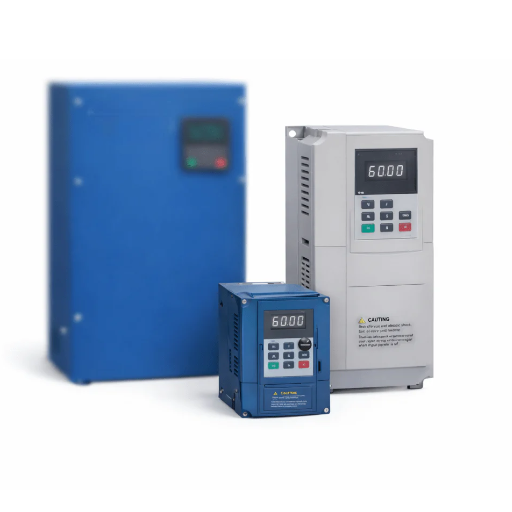
Purchase price is only the down payment. The true cost of a frequency converter unfolds over its operational life through energy losses, maintenance, space, and eventual replacement.
Scenario Parameters
- Power rating: 100 kVA
- Annual operating hours: 4,000
- Average load: 75% (75 kVA)
- Electricity cost: $0.12 per kWh
- Analysis period: 10 years
Static Frequency Converter
- Capital cost: $32,000
- Efficiency at 75% load: 94%
- Annual energy loss: 75 kVA x 4,000 hours x (1 – 0.94) / 0.94 = 19,149 kWh
- Annual energy cost: 19,149 kWh x 0.12=∗∗0.12=∗∗2,298**
- Annual maintenance: $400 (filter replacement, inspection, fan check)
- DC bus capacitor replacement at year 10: $3,000
- 10-year TCO: 32,000+(32,000+(2,298 + 400)x10+400)x10+3,000 = $61,980
Rotary Converter
- Capital cost: $38,000
- Efficiency at 75% load: 85%
- Annual energy loss: 75 kVA x 4,000 hours x (1 – 0.85) / 0.85 = 52,941 kWh
- Annual energy cost: 52,941 kWh x 0.12=∗∗0.12=∗∗6,353**
- Annual maintenance: $2,800 (bearing replacement, brush inspection, lubrication, alignment)
- Major overhaul at year 7: $8,000
- 10-year TCO: 38,000+(38,000+(6,353 + 2,800)x10+2,800)x10+8,000 = $137,530
The Bottom Line
The static converter saves $75,550 over 10 years, a 55% reduction in total cost of ownership. The payback period on the initial capital difference is approximately 1.2 years. After that, the savings compound annually.
Hidden Cost Factors
Beyond the direct calculation, several secondary savings favor static technology:
- Space savings: A static unit occupies 0.8 m2 versus 2.5 m2 for rotary. At 500persquaremeterannualfacilitycost,thissaves500persquaremeterannualfacilitycost,thissaves850 per year.
- Cooling load reduction: The static converter dissipates roughly 10 kW less waste heat. In temperate climates, this reduces HVAC operating cost by approximately $800 per year.
- Noise mitigation: Rotary sets at 75-85 dB often require acoustic enclosures costing $5,000-15,000. Static units at 55-65 dB typically need no special treatment.
- Foundation savings: Rotary converters require reinforced foundations to isolate vibration. Static units install on standard industrial flooring.
When the Math Changes
The TCO advantage shifts at extreme power levels:
- Below 10 kVA: Static dominates even more. Rotary becomes proportionally expensive due to fixed mechanical overhead.
- Above 1,000 kVA: Rotary cost per kVA drops. The TCO gap narrows but static still typically wins.
- Above 5,000 kVA: Rotary may become cost-competitive in capital cost. At the utility scale, the economics require project-specific analysis.
Need help calculating your specific TCO? Contact our engineering team for a free lifecycle cost analysis based on your load profile and electricity rates.
Decision Framework by Application
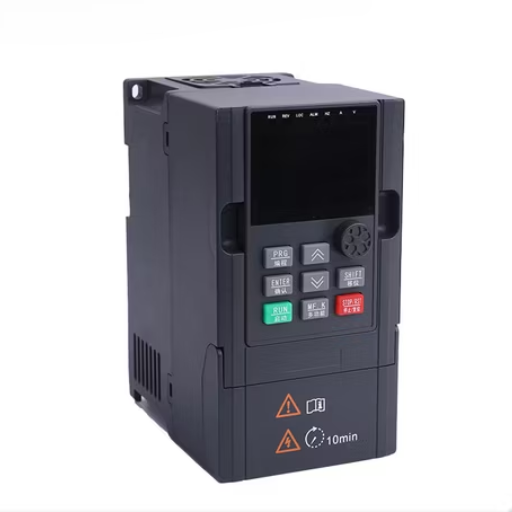
The right technology depends on what you are powering, where you are installing it, and what constraints you face.
Choose Static When
- Aviation ground power (400Hz): Precise frequency control at 400Hz plus or minus 0.01% is essential. Only static converters offer this level of programmable accuracy.
- Industrial test systems: Frequency sweeping, voltage variation, and programmable sequences require digital control.
- Export equipment testing: Converting 50Hz to 60Hz or vice versa for product verification.
- Noise-sensitive environments: Airport gates adjacent to terminals, military bases near barracks, hospitals, and laboratories all benefit from the quiet operation of static units.
- Remote or unmanned sites: Minimal maintenance access makes rotary bearing replacements impractical.
- Space-constrained facilities: The 60-70% smaller footprint matters in crowded electrical rooms.
- Applications requiring redundancy: Parallel static modules achieve N+1 redundancy easily. Rotary redundancy requires separate complete units.
Choose Rotary When
- Very heavy motor starting: Direct-on-line starting of large motors draws 5-7x running current. Rotary inertia supplies this surge naturally. Static converters must be oversized or use soft-start sequencing.
- Extremely dirty or unstable grids: Locations with severe voltage sags, harmonics, or frequent interruptions. Mechanical inertia rides through brief disturbances that would trip electronic protection.
- Very high power above 5,000 kVA: At utility scale, rotary cost per kVA becomes competitive and proven designs exist.
- Legacy system integration: When replacing a single unit in a multi-unit rotary installation, maintaining consistency may outweigh switching technology.
- Naturally sinusoidal output requirement: Certain sensitive test applications prefer generator-produced sine waves over filtered PWM output.
The Gray Zone
For standard industrial motor drives in the 50-500 kVA range, either technology can work. The decision then hinges on:
- Maintenance budget and technician availability
- Energy cost and operating hours
- Noise and space constraints
- Future expansion plans
In most gray-zone cases, static technology wins on lifecycle cost. But rotary remains a defensible choice if upfront capital is severely constrained or if the specific load profile demands surge capacity.
Power Range Sweet Spots
Different power ranges favor different technologies. The following table summarizes the typical winner by capacity.
| Power Range | Static Advantage | Rotary Advantage | Typical Winner |
|---|---|---|---|
| 1-30 kVA | Very high | Minimal | Static |
| 30-200 kVA | High | Moderate | Static |
| 200-500 kVA | Moderate | Moderate | Static (usually) |
| 500-2,000 kVA | Moderate | Low | Static |
| 2,000-5,000 kVA | Low | Moderate | Depends on the application |
| 5,000+ kVA | Low | High | Rotary (usually) |
The boundary at 5,000 kVA is not absolute. A mission-critical 3,000 kVA aviation installation might still choose static for redundancy and precision. A 2,000 kVA mining operation with massive motor starting loads might prefer rotary for surge capacity.
Maintenance Reality Check
Static converters need less maintenance than rotary sets, but neither is maintenance-free. Understanding the real maintenance burden helps buyers plan resources and budget accurately.
Static Converter Maintenance
- Quarterly: Inspect and clean or replace air filters. Check for blocked ventilation.
- Annually: Verify fan operation and bearing condition. Torque-check power connections. Verify control system calibration against a reference.
- Every 5-7 years: Replace cooling fans as preventive maintenance before failure.
- Every 10-15 years: Replace DC bus capacitors when ESR rises or capacitance drops below 80% of rated value.
- Continuous: Monitor via digital interface. Track operating temperature, fault history, and capacitor health indicators.
Annual cost for a 100 kVA static unit: $300-500.
Rotary Converter Maintenance
- Every 6-12 months: Inspect brushes for wear. Measure bearing temperature. Check belt tension or coupling alignment.
- Every 12-18 months: Replace bearings depending on operating hours and load severity.
- Every 2-3 years: Replace brushes. Realign coupling if direct-drive. Replace lubricant.
- Every 5-7 years: Major overhaul including rewinding assessment, bearing replacement, and complete alignment.
- Continuous: Vibration monitoring. Acoustic inspection for bearing noise. Thermal monitoring.
Annual cost for a 100 kVA rotary unit: $2,000-4,000.
A Real Maintenance Story
At a textile mill in Vietnam, three 150 kVA rotary converters powered weaving machines imported from Europe. The humid tropical climate accelerated bearing corrosion. Maintenance logs showed bearing replacements every 14 months at 3,200perunit. Brushdust contaminated nearby control panels, causing two unplanned shutdowns in eighteen months. After switching to static converters,annualmaintenancedroppedto3,200perunit. Brush dust contaminated nearby control panels, causing two unplanned shutdowns in eighteen months. After switching to static converters, annual maintenance dropped to 600 total for all three units. The eliminated brush dust resolved the control panel contamination issue entirely.
Transitioning from Rotary to Static
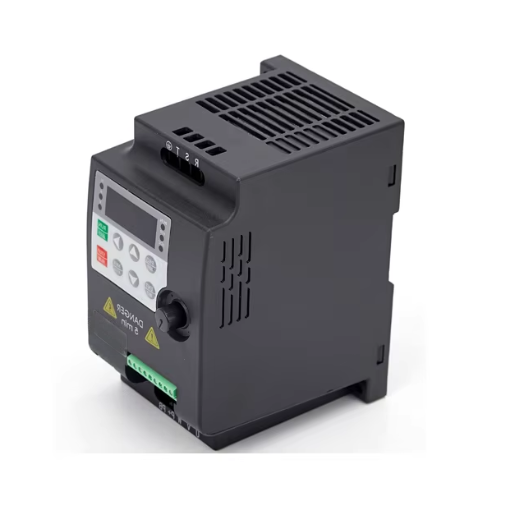
Many buyers are not choosing between technologies for a new installation. They are deciding whether to replace existing rotary equipment.
When to Replace
Consider replacement when:
- Annual maintenance exceeds 20% of replacement cost
- Efficiency losses cost more than $2,000 per year in energy
- Noise or vibration complaints affect adjacent operations
- A bearing failure triggers an unplanned major overhaul
- Space constraints prevent adding capacity
Transition Planning
Replacing a rotary converter with a static unit requires attention to several factors:
- Surge capacity: Match the static converter’s overload rating to actual load starting requirements. If the load requires 300% surge, either specify a larger static unit or implement soft-start sequencing.
- Input harmonics: A static converter with a diode bridge rectification may need input filters to meet grid harmonic limits. Active front-end rectifiers solve this but add cost.
- Output waveform: Most modern static converters with proper output filters produce THD under 3%, acceptable for nearly all loads. Verify this specification if you have sensitive equipment.
- Physical installation: Plan for the smaller footprint. The new unit may not fill the existing pad or enclosure. Consider relocating or repurposing freed space.
- Downtime: A direct replacement typically takes 1-2 days. Plan during a scheduled maintenance window.
Southeast Asian Airport Example
When a regional airport in Southeast Asia evaluated replacement options for four aging 75 kVA rotary GPUs, the maintenance records told a clear story. Each rotary unit required bearing replacement every 18 months at 2,800. Over five years, maintenance alone costs 2,800. Over five years, maintenance alone costs 22,000 per unit. The replacement static frequency converters offered 30% smaller footprint, eliminated all mechanical maintenance, and improved efficiency from 84% to 94%. The payback period on the upgrade investment was under three years. Gate operators particularly appreciated the near-silent operation, which eliminated the need for hearing protection during aircraft connection.
Frequently Asked Questions
Is a static converter more reliable than a rotary converter?
For most applications, yes. Static converters eliminate bearings, brushes, and couplings, which are the most common failure modes in rotary sets. Mean time between failures for industrial static converters typically exceeds 50,000 hours, compared to 20,000-30,000 hours for rotary motor-generator sets. However, static converters rely on capacitors that degrade over 10-15 years, and IGBT modules can fail from thermal stress. No technology is failure-proof.
Can a static converter handle motor starting surge?
Static converters can handle 150-200% of the rated load for 10-60 seconds, depending on design. For most motor applications with soft starters or variable frequency drives, this is sufficient. However, for very large motors started direct-on-line, where inrush reaches 500-700% of running current, a rotary converter’s mechanical inertia provides superior surge capacity. In such cases, either choose rotary or significantly oversize the static unit.
Why do some suppliers still recommend rotary converters?
Three reasons. First, some suppliers specialize in rotary technology and have no static product line. Second, for very specific applications like heavy surge loads or extremely dirty grids, rotary genuinely remains the better choice. Third, rotary sets have a long service history in certain industries, and some engineers prefer proven technology over newer alternatives. A supplier should explain which technology fits your application rather than promoting only what they sell.
How much quieter is a static converter?
A static converter produces 55-65 dB of noise, primarily from cooling fans. A rotary converter produces 75-85 dB from mechanical rotation, windage, and bearing noise. The 20 dB difference represents roughly four times the perceived loudness. In practical terms, a static converter can operate in a standard electrical room without hearing protection. A rotary converter often requires a separate room or acoustic enclosure.
Can I replace my rotary converter with a static unit without rewiring?
Usually yes. Both technologies accept standard three-phase input and produce three-phase output. The cable sizing for a static unit may differ if the new unit has a different efficiency or power factor. Output voltage and frequency settings must be configured to match your load requirements. Always verify input current harmonics if your facility has strict power quality limits.
Do static converters produce cleaner power than rotary converters?
Modern static converters with well-designed output LC filters achieve THD of 1-3%. Rotary converters naturally produce THD under 1% because the generator creates a sinusoidal waveform without electronic switching. For most industrial and aviation applications, both levels are acceptable. For extremely sensitive test equipment, the natural sine wave of a rotary generator may be preferable.
What is the payback period for replacing rotary with static?
For a 100 kVA installation running 4,000 hours per year at 75% load, the payback period is typically 1-3 years. The payback comes from three sources: energy savings due to higher efficiency, reduced maintenance costs, and eliminated ancillary expenses like acoustic enclosures or vibration isolation. For larger units running more hours, payback can be under one year.
Are there applications where rotary is definitely better?
Yes. Three scenarios strongly favor rotary technology: very heavy direct-on-line motor starting where surge capacity exceeds 300% of rated load, installations on extremely unstable electrical grids where voltage sags and interruptions are frequent, and very high power applications above 5,000 kVA where rotary cost per kVA becomes competitive. In all other scenarios, static technology is generally superior.
Conclusion
The static converter vs rotary converter decision is not about which technology is newer or which vendor prefers it. It is about matching technology to your specific load profile, operating environment, and lifecycle budget.
For the majority of buyers in 2026, particularly those with applications under 2,000 kVA, static frequency converters deliver a lower total cost of ownership through higher efficiency, minimal maintenance, quiet operation, and compact size. The 10-year TCO advantage typically reaches 30-55%, with payback periods under three years.
Rotary converters retain their place for heavy surge loads, extremely dirty grids, and very high power installations where mechanical inertia and proven designs offer genuine advantages. The key is honest evaluation rather than vendor bias.
Before specifying either technology, calculate your specific total cost of ownership. Factor in energy rates, operating hours, maintenance capacity, space constraints, and noise limits. The numbers will tell you which technology wins for your project.
At Shandong Electric, we manufacture both static and rotary frequency converters, which allows us to recommend the right technology without product-line bias. Our engineering team provides free TCO analysis and transition planning for replacement projects. Whether you need a 400Hz aviation ground power unit, a 50/60Hz industrial test system, or guidance on replacing aging rotary equipment, we can configure a solution for your exact requirements.
Ready to calculate your TCO? Contact our engineering team for a free lifecycle cost analysis, or explore our complete static frequency converter guide for a deeper technical background.
