
Industrial Applications of Frequency Converters
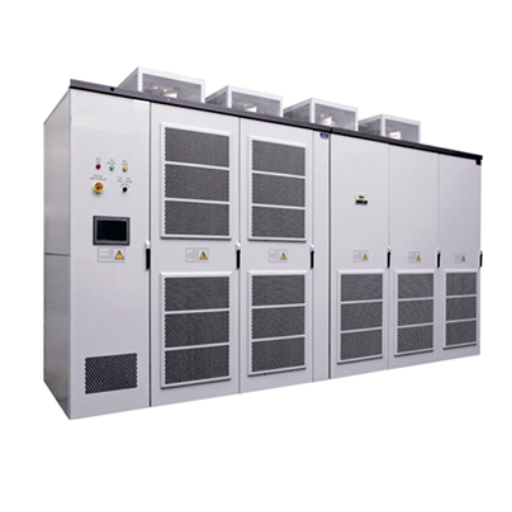
A necessity in many industrial utilities, high-voltage inverters known as frequency converters are put into production to help regulate the speed and torque of engines. The use of such devices is especially common in trade, power, and transport amongst others. For instance, the equipment is irreplaceable in the course of production in enhancing the performance of conveyors, sanitary pumps, ventilation, etc reducing the expensive wrong utilization of energy and enhancing the precision of work. The energy industry, frequency converters are required for wind power stations, heat pumps and composite systems, and microgrid control, enabling the configuration of individual power outputs for components of such power plants, irrespective of varying resources.
Frequency Converters in Industrial Settings
Recent years have witnessed considerable strides in the development of modern frequency converters with their efficiency and accuracy being the focal point. It is worth mentioning that, pronouncedly old are current developments of models that are utilizing latest generation semiconductor materials which are made from such materials as Silicon Carbide (SiC) and Gallium Nitride (GaN) among others. The deployment of those materials already and will more in future contribute to energy conservation as well as use for achieving better heat removal practicability within the converter. Those materials also made possible to work on much higher frequencies and created a possibility to build the converter in a small volume without reduction of the power rating.
One other major achievement we achieved in development is making predictive maintenance supported by it very effective. The ability of inverters to diagnose worn out parts and worn out operating mechanics is an advantage of indeed advanced technologies with an advanced featured equipment. For example by use of both a basic inverter with a sensor and a plain inverter that does not have a sensor. Among the innovative features of a VFD includes the ability to detect various operating deficiencies on a motor through input phase modulation. It is for this reason that inverters that are presently available in the market have a myriad of functionalities which can be used to mitigate some of the operational variables and failure causes that have been described earlier.
Case Studies: Successful Implementations
Optimizing HVAC Systems in Commercial Buildings
An advanced industrial installation employed frequency converters for the improvement of its HVAC setup in order to cut energy bills significantly. The facility milking variable voltage and current frequency inverters managed to optimize their fans and its pumps to operate at their demand driven speeds. It resulted in a 30% energy cost reduction and improved critical equipment shelf life through less mechanical wear. The frequency converters advanced energy savings and operational confidence of large systems throughout this application.
Enhancing Manufacturing Line Efficiency
Acme Automotive was motivated to improve the output and driving time of its plants. This company included use of advanced converters with the ability to forecast maintenance and provide real-time updates. In this way, the number of malfunctions was inversely shrunk by 25% within the first year. Moreover, the use of those converters was amendment by the capacity to adjust to the increasing movement at different corners of the manufacturing facilities which especially worked in reducing the energy warehouse effect and thereby elevating the total production speed.
Renewable Energy Integration in Wind Farms
Another instance depicts the utilization of the newest converters by the wind power company. Expansion of output of electric power and energy absorption was applied therewith. Turbine rotors were accelerated or decelerated for the purpose of matching generator speed with the wind speed. Also, the grid enabled smooth operation and its level was even relative to the original 15%. This portion of the work points to the importance of applications of frequency converters in the area of generating clean energy.
Types of Frequency Converters
| Type | Description | Key Applications | Efficiency | Main Benefit |
|---|---|---|---|---|
| AC to AC | Directly changes AC frequency and voltage. | Fans, pumps, industrial motors. | High | Simple, direct control of frequency. |
| AC to DC to AC | Converts AC to DC, then back to AC. | Renewable energy systems, grids. | Very High | Precise control and adaptability. |
| Cycloconverters | Converts AC frequency without DC intermediate. | High-power drives, rolling mills. | Moderate | Smooth operation and low harmonics. |
| Matrix Converters | Uses switches to convert AC to AC directly. | Aerospace, advanced industries. | High | Compact design with no DC link. |
| DC to AC (Inverters) | Converts DC to variable AC output. | Solar power, electric vehicles. | High | Efficient AC conversion from DC. |
Benefits of Frequency Converters in Heavy Industry
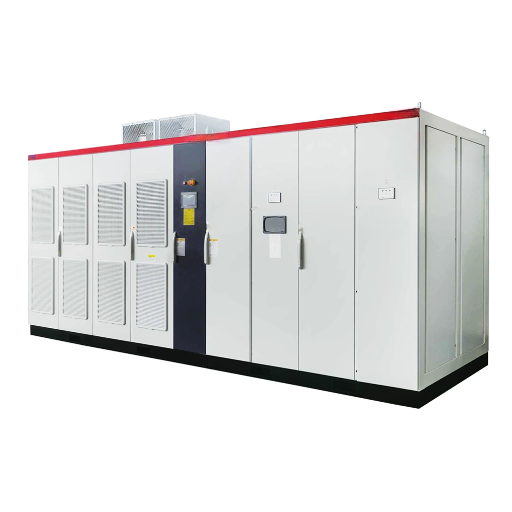
Frequency converters play a significant role in heavy industries because they make it possible to control precisely the speed of a motor which comes with a number of benefits. In fact, it helps save energy as motors operate within the limits required of them instead of working at full capacity for no good reason. For the same reason, when it comes to motor shut-downs and start-ups as well as speed changes, there are significantly fewer stresses on the motor allowing the equipment to last longer and the amount of maintenance required to be reduced. Furthermore, these mechanisms assist in enhancing the precision and productivity of a system for no less than they promote steadier and more or alike vantages in operation when needed, which is vital in such areas as manufacturing, mining and steel production. Conversion of frequency to work and vice versa through such devices saves so much in management and economical factors and ensures that operations can be sustained.
Energy Efficiency and Cost Savings
Frequency converters are fundamentally important in enhancing power efficiency across different industrial applications. This is because these devices decrease energy consumption greatly in comparison to the traditional fixed-speed setups by allowing the motor speed to be set according to the specific load. According to research, variable frequency drives (VFDs) are able to reduce energy consumption up to 50% especially when used in systems like pressurised systems such as pumps, compressors and fans for varying loads. And even more so, the fact that they can be used less decreases the incidence of stress on mechanical components and in effect, results in reduction of operational care costs and enhancement of a system’s durability over time.
Considering the financial perspective, it is cost effective to adopt variable frequency drives. The reduction of power consumption leads to the reduction of its cost, which is of immense importance, especially in industries which use great deals of power. It is also worth noting that the use of frequency converters assists organizations to comply with expected energy laws in terms of energy conservation without having to pay any fines and the companies will be able to participate in other programs that aim at encouraging environmentally friendly activities. Within such a context, it is clear that Frequency Converters play vita role in implementation of proper modern industrial solutions.
Improving Industrial Automation
Modern frequency converters are becoming more and more advanced in synergies with several other technologies like IoT (Internet of Things), Machine learning, real-time data analytics, etc., to enhance operational efficiency in automation in different sectors. This helps in conditions where faults are mitigated prior to their occurrence hence calling for no unplanned downtimes due to what is referred to as predictive maintenance. A closer examination of the capabilities within the frequency converters like embedded sensors to read vital sign information of the plane voltages, currents, temperature, etc., is possible and this information is used to keep track of the overall system behavior. Substantial reduction of energy expended by the motors is possible when the motor does not have to idle or when power will be supplied to other loads apart from the motor.
Moreover, one more important aspect is the integration of this equipment with the central process control systems via communication protocols like Modbus, PROFIBUS, and EtherCAT. This will allow more efficient use of frequency inverters and other machines by optimizing technological sequence within a system. Use of cloud services broadens the field and allows industries to obtain and analyze large sets of operational data slowly collected. It has become hard to meet the changing requirements of the clients in the legal industry due to the changes that have been taking place in this sector.
Integration Protocols
Communication standards enabling modern frequency converter integration include Modbus, PROFIBUS, and EtherCAT — enabling more efficient use of frequency inverters and other machines by optimizing technological sequence within a system.
Enhancing System Reliability and Performance
The efficiency and quality of frequency converters are a function of the level of advancements in diagnostic tools, robust design solutions, and thermal management techniques. Integrated maintenance features that forecast failures, which involve monitoring the equipment condition in real time, helps to identify upsets by analysing vibration, temperatures, or electric current. To alleviate operational disruptions under varying loads, there are strategies aimed at reducing axial heat flows and regulating rotor in air with improve interphase and impregnation materials controls. One other improvement is the integration of hardy design technologies like silicon carbide (SiC) in the power modules, which has increased savings through efficiency and even performance under harsh industrial working conditions. Hence, these advances cumulatively facilitate the seamless functioning of modern frequency converters with minimal failure times and enhanced life span.
Selecting the Right Frequency Converter
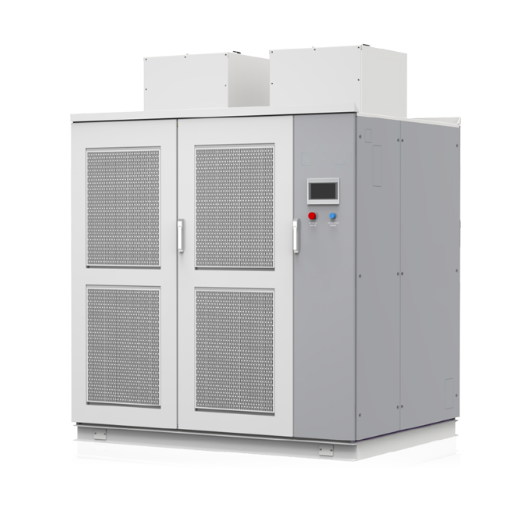
If you concentrate on the topmost vital factors, it becomes possible to select the most appropriate frequency converter such that its service is equally consistent and dependable.
- 01
Application Requirements
It is important to comprehend the detailed operational aspects of the application, one of which would include the type of the motor, voltage supply and output frequency range. Make sure the converter is functional in the system and the processes that are planned.
- 02
Power Capacity
Determine the magnitude of load and power usage in order to make the right selections. Identify a frequency converter with sufficient peak power capability to meet the maximum demand without damaging it.
- 03
Energy Efficiency
Recommend the use of power converters that will support the objective of the project in terms of overall low operating costs. Choose converters which use advance technologies such as variable speed drives to reduce power consumption.
- 04
Environmental Conditions
Considering the said operating environment, the experts should evaluate heating, humidity or other additional issues like pollutions. It is desirable to purchase converters which issue with the protection has been solved.
- 05
Control Features
It is necessary, to know what are the control options available, like how one can reproduce the states, how possible it is, to manage the equipment, remotely and update the equipment in the current automatic system easily include.
Evaluating Voltage Requirements
The correct understanding of the voltage requirement is essential to do the selection and properly use devices, such as frequency converters, so that the overall operational safety and efficiency are enhanced. The very first step is to establish the level of voltage available in the place of installation which normally comes in three forms, i.e., low voltage (below 1 kV), medium voltage (1 to 35 kV) and high voltage (above 35 kV). With this classification one can straight away know the type of equipment that will be required.
Different machinery has different operational voltage requirements; therefore, it is a good practice to check that the operational voltage window of a mode is in concordance to the frequency converter’s input voltage and/or output voltage. Failures in this can lead to loss in administration function, damage to equipment or even create perilous situations. It is equally important to consider voltage stability in a power supply system and voltage fluctuations by such a scrutiny to determine if there is any voltage change control inclusion in the design of the frequency converter.
For industrial facilities exposed to high and medium voltage fluctuations, effective measure aimed at combating the same involve systems with a voltage range that can tolerate fluctuations as well as those that contain an automatic voltage variation mechanism. Also, in configurations that employ localized and correlated power sources or involve long transfers, assess the interest of voltage drops generated from the resistance per unit length of the conductor, and deal with the issues incured so as to prevent any losses of energy.
Low Voltage
Below 1 kV
Medium Voltage
1 – 35 kV
High Voltage
Above 35 kV
Compatibility with Renewable Energy Sources
In recent decades, as the deployment of renewable energy sources with considerable voltage and current generation capacities, such as solar and wind power plants, has proliferated, the demand has been expanding for power supply units that can deal with large variations as well as with irregular input envelopes. Renewable energy sources are by their very nature on-off in operation, which means that output sources like power supply must be able to take in varying voltages and give out stable, regulated outputs. Maximum Power Point Tracking (MPPT) power supplies are also known to assist high efficiency levels that are often realized in pv power systems.
There is a specific need in wind energy applications to be able to transition very quickly between power rate and frequency levels, resulting in the requirement for rapid dynamism and load-following. Also, the increasingly popular introduction of energy storage systems that employ lithium-ion batteries is emphasizing the need for systems that can interface with advanced battery management systems (BMS) particularly in order to ensure the optimization of charge and discharge currents. These aspects help prevent unnecessary charging and discharging values, which leads to a longer useful life of the energy source and generation system components. In particular, solutions for renewable energy systems have been considered environmentally sound development and are in synergy with the levels in policies that promote sustainability performance.
Technological Advancements in Frequency Converters
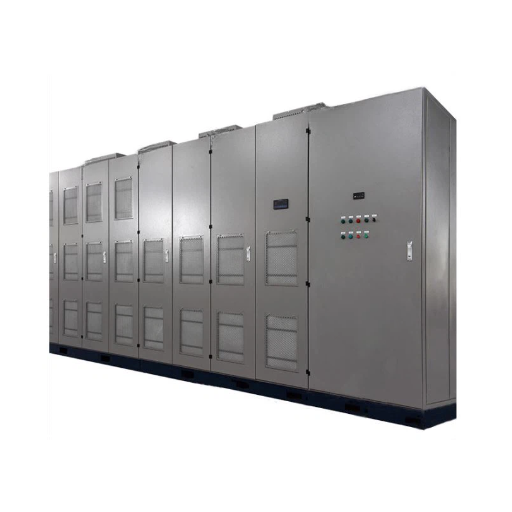
Nowadays, new generation frequency converters have been technologically evolving to provide improved energy efficiency, flexibility and accuracy, one of their primary utility, namely regulation of-voltage and/or frequency. Among such advances we should also mention the using of advanced microprocessor circuitry as well, which lets the users to make voltage and frequency adjustments more precisely. Moreover, the use of recently invented advanced semiconductor insulated-gate bipolar transistors (IGBTs) coming with enhanced switching speed has reduced energy losses and system heat.
In addition, there are advanced failure prevention and real time control techniques in each of these variable speed drive systems, which enable or rather allow proactive maintenance in place of breakdown maintenance and consequently mitigate downtimes. In the same way, most are constructed in such a way that they are able to operate on renewable source of energy. They are able to work well with sources as solar panels and wind turbines among others leading to optimized use of resources and effective costs savings in both the industrial, commercial and renewable energy sectors.
Innovations in Design and Functionality
Such high-end materials as silicon carbide (SiC) and gallium nitride (GaN) are now used in innovative techniques making the converters smarter, more enduring and efficient. More energy-saving speeds, great thermal conductivity and high temperature operation characteristics indicate why use of these chips has advantages in higher performance applications. There is also a focus on the design of heat removal systems, in particular on the incorporation of the more recent technology advances including liquid-cooled heat-sinks and thermoelectric devices into such systems. Also by ensuring more effective heat transfer and reducing the impact of thermal loads, these are able to increase the life span of the power converters, and hence their reliability in industries and energy fields.
Impact of Smart Technology on Industrial Frequency Converters
The transformation of frequency converters is remarkable, in that programmable logic controllers also known as smart technology has been incorporated into among many things. Such include several of more advanced features that go in delivering notable increases in output. Advanced machines now have a bounty of sensors and IoT modules which enable real-time monitoring of performance indicators like power consumptions, loading conditions, and temperature considerations. This kind of in depth information makes it practical to implement the concept of preventive maintenance, with it, a trend that allows for the maintenance staff to detect a fault just before it becomes catastrophic causing downtime and hence putting a stop to expensive overhauls.
Employment of smart and advanced Frequency Converters is a great way to ensure optimal production. It adjust controls invariably to keep the right speed of the motor, especially when it serves the same purpose, also eliminates energy wastage. Based on some economic analysis, the operation of such an economical system will save up to 30% of electricity consumption, and meet energy utilization requirements of energy intensive sectors such as productive and processing industries in a less costly manner.
Furthermore, Smart frequency converters have the ability to work with other industrial communication protocols such as EtherCAT, PROFINET, and Modbus. This creates interconnectivity whereby each machine will operate concurrently and promote to the overall control of the system. These changes lead to a reduction in waste and it allows for the operators to have a virtual control over production increases or decreases in the production process.
Future Trends in Frequency Converter Technology
Energy efficiency is one of the most widespread in frequency converter technology at the moment. This is why the new generation of frequency converters is on a different level so far as materials used in it are concerned: Highly efficient power components, such as SiC and GaN semiconductors. These materials help to reduce power losses and increase switching frequencies as well as facilitate efficient thermal dissipation, thus reducing the total energy consumption. Furthermore, such features will allow the adjustment of the load and speed of the motor upon request from the converter, while the current rate of electrical power use in the operation systems remains efficient.
The fusion of cutting-edge concepts such as Artificial Intelligence and Machine Learning and inverter technologies can be counted as a breakthrough worthy of note. Equipped with predictive capabilities, intelligent inverters can predict the premature breakdown or inefficiency occurring in any device leading to maintenance that is preventive, not corrective. The use of machine learning in the extremly efficient systems performance, as the trending algorithm takes into account recent data, leverages the system and controls it in real-time for maximizing performance and upholding reliability. These along with many other trends are putting an active methodology towards organizational and technical management in place which is a necessity for highly-automatic industry areas.
Constellations of the devices in light of the constantly growing dissipation of technology in case of industrial patterns cause usage of frequency converters as the main strategy to improve the system efficiency. Using the Web of Things technology, modern frequency converters are actually web connected systems. They can be used for remote monitoring, diagnosis as well as the storage of data over the internet. Tight coupling of the devices to be controlled and those doing the controls is achieved by standardization of data exchange mechanisms using protocols such as OPC UA and MQTT. As a result this high degree of connectedness enhances visibility which in turn segues into more knowledgeable decision making based on the fact that assets can be controlled from a center.
Challenges and Considerations
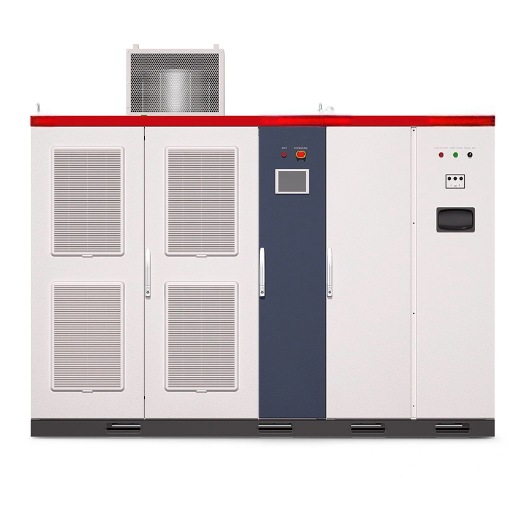
There is a lot that must be considered in regards to successful utilization of frequency converters. For effective functioning in various industrial scenarios, frequency converters have continued to pose special requirements for reappraisal in the areas of design, installation, and maintenance to ensure reliable and energy-efficient operation.
-
Harmonic Distortion
The electrical systems can inject unwanted harmonics due to the application of power electronics, which are known to impact the performance of the flow of electrons especially in the case of circuits in computer systems or power circuits. Proper measures to prevent such effects, such as set up filters or harmonic compensators, are necessary.
-
Thermal Management
Consistent use of the facility will tend to overheat the power source, hence leading to failure as well as reducing the service life of the unit. Available solutions for thermal control include, ventilation and cooling systems, as well as heat sinks which are highly relevant in this case.
-
Energy Efficiency
It is within the purview of design to install the frequency converters with an aim of enhancing the utility energy efficiency. However, the realization of energy conservation enhancement depends on their proper selection taking into consideration the application load profile. Such systems which are not fully matchable result in poor performance of the system.
-
Maintenance Requirements
Scheduled maintenance is necessary to maintain long-term positive performance. Certain problems such as dust and dirt clogging up the HVAC system, parts of the equipment which wear and tear such as filters can also become hardened, and software that needs to be updated also must be addressed before a problem gets out of control.
-
System Integration
Potential difficulties in integration of frequency converters with existing automation systems arise with due compliance to control logics and architecture. Special repairs are also required during installation.
Common Issues in Implementation
Simply embedding frequency converters onto any industry’s infrastructure can demand keen oversight and resolution as there are typically some problems that arise. One such problem that presents itself dynamically in the field of electrical discharge – harmonic interaction. The harmonics may cause issues on the power system, interference to operating devices and causes degradation of the performing characteristics of a device. Inadequate attempts to manage this particular issue of the power quality might result to transformer overloads, overcurrent tripping or even the malfunctioning of the subassembly.
Configuring frequency converter devices incorrectly is a significant concern as well, since it results in such inefficiencies as under-use of the motor running spare capacity, whjch will affect operational costs. Wear and tear on the motor, exceeds allowable limits. It is impossible to ignore the issue of thermal management as one can hardly work effectively after prolonged operation/hr of operation without sufficient ventilation or cooling mechanisms. High probability that frequency converter will not last long if meltdown is reached and it is expected that the equipment including the frequency converters will be costly.
Maintenance and Operational Challenges
EMI and frequency inverters play a significant operational challenge. EMI is caused when frequency inverters create high frequency switching signals as this can produce electromagnetic interference that can interfere with other sensitive equipment or communication systems. Enclosures are ultimately grounded and have a necessity for shielding. Therefore, cable routing which includes power conductors and control wiring distribution must be followed to help in reducing the risks of interference. Also, modern inverters come with advanced EMI control but these must be appropriately installed and must be in line with the relevant codes including IEC 61800-3 for variable speed drives to achieve consistency and improved performance.
Generally speaking the operation of most electric motors requires the use of frequency converters in order to efficiently control the rate at which they rotate. In this case, the interconnected equipment can introduce stress or worsen resonant conditions. Undoubtedly, these factors do not arise exactly through the motor construction. The engineers must carry out thorough system modelling and analysis so that the operating parameters are set in such a manner as to avoid the scenarios. In addition, using vibration isolators or flexible couplings can reduce the damage from resonance conditions even further.
Regulatory and Compliance Factors of Frequency Converter
To ascertain the safe, economic and – where achievable – environmentally sound operations of the frequency converters, they are to be constructed in accordance with defined standards and principles. One fundamental aspect is the electromagnetic compatibility (EMC), as whether it can be taken care of as prescribed under the IEC 61800-3 standard. According to this standard conducted and radiated electromagnetic interferences are restricted so far as they cause minimal interference to other systems.
Meanwhile, a significant attention in the energy area is attached to introduction of the energy efficiency requirements, which are often promoted by such organizations as the International Energy Agency (IEA) and especially implemented at the regional level through such acts of the European Union as the Ecodesign Directive (2009/125/EC). These standards are intended to foster the application of energy-efficient technologies, thus, frequency converters with high electrical efficiency are unavoidable to use for those industries concerned about the conservation of energy and the environment.
But it is crucial for all operators and for the units themselves, to follow the necessary standards European Norms including directive IEC 61800-5, which establish the technical requirements for safe operation of frequency converters in the terms of electrical, thermal or mechanical breakdown. Such requirements are important due to the risks of thermal or electrical shocks excessively, which is why they are required for compliance. It is the duty of both manufactures and end users to check if frequency converters are properly certified by recognized institutions and not merely declared to be. Such institutions include UL (Underwriters Laboratories) for North America and CE (Conformité Européenne) for Europe.
Ultimately, there is a significant number of cases where several localities have gradually set up firmer policies and measures with regards to the usage of substances that endanger human health and the environment along with their final disposal, such as the RoHS (Restriction of Hazardous Substances) Directive and the WEEE (Waste Electrical and Electronic Equipment) Directive in the EU. Such legislation also makes it necessary for manufacturers to come up with more advanced design of frequency converters that do not contain regulated substances that will endanger the environment and are safe when discarded at their end-of-life.
Frequently Asked Questions
How do high-voltage frequency converters improve energy savings in heavy industry?
Advanced high voltage frequency converters are excellent for regulating the speed on variable frequency drives and this, in turn, helps to save energy by matching the motor’s speed to the process requirement. Overdriving may be saved while energy consumption management strategies set in and energy usage at stand by mode is also reduced which also has the advantage of reducing the costs. The feasibility of using sustainable operation methodologies as well as the employment of drives recover the high capital investments more rapidly.
What role does harmonic distortion play in converter efficiency?
When frequency converters distort wave forms, harmonics embedded with the wave are common cause of increased system losses in transformers, motors and cables. The effect of the sine waves harmonics can be partially ecountered with filtering, active front end or other IEEE compatible systems which maintain efficiency and extend the life of the equipment. Managing the harmonics properly prevents hot spots, crosstalk with or solicitation of supervision data, among other issues as pertains to control systems.
How can power factor correction enhance converter performance?
Power-factor compensation enhances the effective use of kVA at high voltage levels and decreases the ineffective consumption of kVA (leading to greater capacity of power systems), which is inefficient both economically and technically. Such power-factor compensation introduced concurrently with choppers decreases the excess coefficients and enables operation of the system closer to the maximum dead efficiency. The complex approaches involving the compensation of reactive and active energy in the network are utilized in advanced systems of power electronics providing the expected improvement of electrical energy quality through harmonic mitigation and power factor correction control techniques for nonlinear loads.
What maintenance strategies reduce losses in high voltage converters?
Regular maintenance at intervals with particular care on inspection of the chilling system, the condition of capacitors and quality of gate driver signals helps to prevent the occurrence of premature fault and heat buildup. Predictive maintenance through condition monitoring approach and CMMS helps plant personnel in identifying the emerging problems therefore easily avoiding the instances of major catastrophic breakdown which cripple the performance levels of the plant. Software updates of the control logic and patches for the firmware are scheduled in such a way that the existing control algorithms can offer better efficiency.
Reference Sources
- 01
High-frequency power conversion for medium voltage power electronics interfaces —
Read more here - 02
Electric grid supply chain review: large power transformers and high voltage direct current systems —
Read more here
