
Solid state frequency converters outperform rotary motor-generator sets in efficiency, reliability, power quality, and total cost of ownership. If you are specifying power conversion equipment for an industrial plant, airport ground power system, or marine vessel, understanding these advantages can save hundreds of thousands of dollars over the equipment’s lifetime.
When plant manager Robert Okonkwo took over a 30-year-old rotary inverter at a West African manufacturing plant, his annual budget was $8,000 for brush replacements, bearing overhauls, and vibration-related repairs. After switching to a solid-state inverter, his maintenance costs dropped to $8,000 per year. After switching to a solid-state inverter, his maintenance costs dropped to $1,200 per year. The inverter recouped its cost in less than four years simply through maintenance savings. This article will detail the key advantages of solid-state inverters so you can develop a similar business case for your operations.
Key Takeaways
- Solid state frequency converters achieve 93-97% efficiency versus 85-90% for rotary sets, cutting energy losses by 50-70%.
- No moving parts means MTBF measured in decades rather than years, with maintenance costs 60-80% lower than rotary equivalents.
- Output power quality is superior: THD below 3%, frequency stability within ±0.01%, and voltage regulation within ±1%.
- Physical footprint is typically 40-60% smaller than rotary converters of equivalent power rating.
- 10-year total cost of ownership favors solid state by 30-50% when maintenance, energy, and downtime are factored in.
Efficiency Advantage: Semiconductor Switching Versus Mechanical Conversion
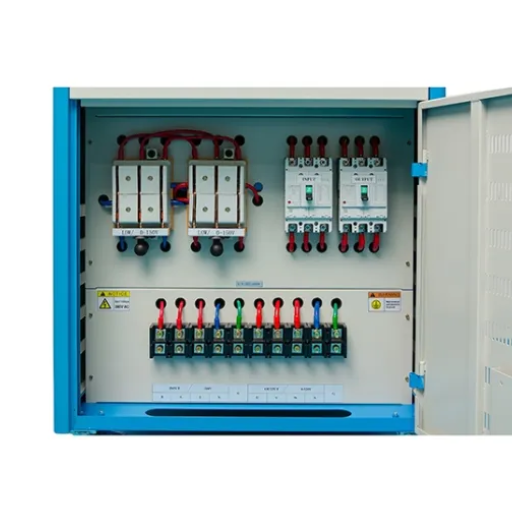
The most immediate advantage of a solid state frequency converter is energy efficiency. Rotary motor-generator sets convert electrical energy into mechanical rotation and then back into electrical energy at the target frequency. Each conversion step introduces losses: copper losses in windings, friction in bearings, windage from rotating fans, and core losses in magnetic steel.
A well-designed rotary converter achieves 85-90% efficiency at rated load. A solid state frequency converter using modern IGBT switching achieves 93-97% efficiency. The difference sounds small until you scale it. A 500 kVA rotary converter running at 87% efficiency wastes 72.5 kW continuously as heat. A solid state unit at 95% efficiency wastes only 26.3 kW. That is 46 kW of recovered power, 24 hours per day, 365 days per year. At 0.12perkWh,theannualsavingsexceed0.12perkWh,theannualsavingsexceed48,000 on a single unit.
The efficiency gap widens at partial load. Rotary converters maintain relatively flat efficiency curves, but their no-load losses remain significant due to continuous rotation. Solid state converters can implement sleep modes, variable switching strategies, and intelligent fan control that reduces losses at low load. For installations with variable demand, this partial-load advantage compounds the savings.
Want to calculate efficiency savings for your specific load profile? Contact our engineering team for a free energy cost comparison between rotary and solid state conversion.
Reliability and Mean Time Between Failures
No Moving Parts, No Mechanical Wear
Rotary converters have bearings, brushes, commutators or slip rings, couplings, and rotating shafts. Every one of these components is a wear item. Brush life is typically 2,000-6,000 operating hours. Bearing life depends on load, lubrication quality, and contamination, but 20,000-40,000 hours is typical before replacement. Couplings fatigue. Shafts can develop runout. Vibration loosens connections over time.
Solid state frequency converters have none of these failure modes. The only moving parts are cooling fans, and many designs use passive heatsinks or redundant fan arrays where a single fan failure does not disable the unit. Semiconductor devices do degrade thermally over time, but MTBF figures for industrial solid state converters routinely exceed 100,000 hours. Some manufacturers quote 200,000+ hours under normal operating conditions.
The Bearing Failure Story
At a Southeast Asian shipyard, a 200 kVA rotary converter suffered a catastrophic bearing seizure during a critical dockside welding operation. The resulting downtime cost the yard $35,000 in delayed vessel delivery penalties. The root cause was inadequate grease maintenance during the humid monsoon season. A solid state replacement installed eighteen months later has operated through three monsoon cycles without a single service call. The absence of rotating assemblies eliminated the primary failure mode.
Maintenance Cost Reduction
Rotary Converter Maintenance Requirements
A rotary converter maintenance program typically includes:
| Maintenance Item | Frequency | Annual Cost (500 kVA unit) |
|---|---|---|
| Brush inspection and replacement | Every 2,000-4,000 hours | 2,500−2,500−4,000 |
| Bearing lubrication and replacement | Every 20,000-40,000 hours | 3,000−3,000−5,000 |
| Vibration analysis and balancing | Annual | 1,500−1,500−2,500 |
| Alignment checks | Annual | 800−800−1,200 |
| Coupling inspection | Annual | 500−500−800 |
| Cooling system cleaning | Quarterly | 1,000−1,000−1,500 |
| Total annual maintenance | 9,300−9,300−15,000 |
Solid State Converter Maintenance Requirements
| Maintenance Item | Frequency | Annual Cost (500 kVA unit) |
|---|---|---|
| Filter capacitor inspection | Every 5-7 years | 200−200−400 (amortized) |
| Cooling fan replacement | Every 5-10 years | 150−150−300 (amortized) |
| Heatsink cleaning | Annual | 300−300−500 |
| Connection torque check | Annual | 200−200−400 |
| Firmware/parameter backup | Annual | $100 (internal labor) |
| Total annual maintenance | 950−950−1,600 |
The solid state frequency converter reduces direct maintenance costs by roughly 85%. Indirect savings from eliminated downtime, reduced spare parts inventory, and lower technical labor requirements push the total operational advantage even higher.
Power Quality and Output Stability
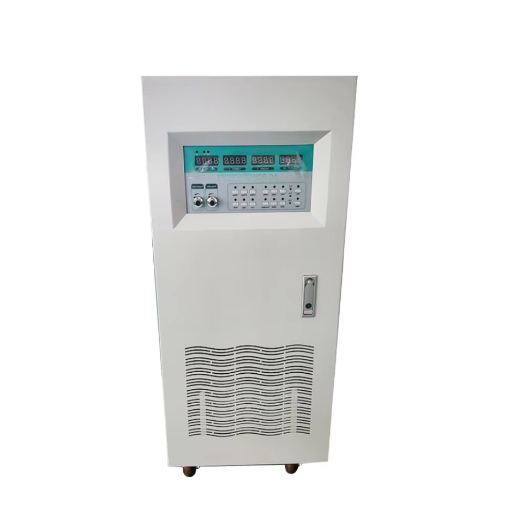
Voltage and Frequency Regulation
Solid state converters use closed-loop digital control to regulate output voltage and frequency in real time. Typical specifications include:
- Voltage regulation: ±1% or better from no-load to full-load
- Frequency stability: ±0.01% to ±0.1% under load variation
- Transient response: Recovery to within ±2% within one AC cycle after a 100% load step
Rotary converters regulate output through rotational inertia and winding design. Their voltage regulation is typically ±3-5%, frequency droop under load can reach 1-3%, and transient response is limited by the mechanical time constant of the rotating mass. For sensitive loads like avionics test benches, precision manufacturing equipment, or medical imaging systems, this difference in power quality is decisive.
Harmonic Distortion and Waveform Purity
IGBT-based PWM inverters with properly designed output filters deliver sinusoidal waveforms with total harmonic distortion below 3%, often below 1.5% at rated load. Rotary generators naturally produce cleaner sine waves, but the quality degrades with load imbalance, brush arcing, and mechanical vibration. More importantly, rotary sets reflect load harmonics back to the source, while solid state converters with active front ends can isolate and filter harmonic currents.
For airport 400Hz ground power applications, waveform quality directly affects aircraft power system health. A distorted 400Hz supply can cause transformer overheating, nuisance tripping of protective relays, and interference with avionics. Solid state converters designed for aviation applications routinely specify THD below 2% to meet these stringent requirements.
Physical Footprint and Installation Flexibility
A 500 kVA rotary motor-generator set occupies approximately 4-6 square meters of floor space, requires concrete inertia bases or vibration isolation pads, and needs overhead crane access for maintenance. The rotating mass creates structural vibration that can affect nearby precision equipment.
A 500 kVA solid state frequency converter typically occupies 1.5-2.5 square meters. It can be wall-mounted in some configurations or installed in standard electrical rooms without special foundations. There is no vibration, no need for crane access, and no restriction on mounting orientation beyond standard cooling clearances.
This footprint advantage matters in retrofit projects where existing electrical rooms were not sized for rotary equipment. It also matters on marine vessels, offshore platforms, and mobile installations where space and weight carry premium costs. A solid state unit weighing 800 kg replaces a rotary set weighing 2,500-4,000 kg, with corresponding savings in structural support, shipping, and handling.
Noise and Environmental Impact
Acoustic Emissions
Rotary converters generate mechanical noise from bearings, brushes, ventilation, and electromagnetic growl. Typical sound pressure levels range from 75 dB to 90 dB at 1 meter, depending on speed and power. In occupied spaces or noise-sensitive environments, this requires acoustic enclosures, sound-rated rooms, or hearing protection protocols.
Solid state converters produce only cooling fan noise and minimal electromagnetic hum. Sound levels of 55-65 dB are typical, comparable to normal conversation. The difference is stark enough that facilities replacing rotary sets often report improved working conditions and elimination of noise complaints from adjacent offices or residential areas.
Thermal and Environmental Load
The higher efficiency of solid state conversion means less waste heat rejected into the installation space. A 500 kVA rotary converter wasting 65 kW as heat requires substantial ventilation or air conditioning to maintain ambient temperatures. The solid state equivalent wasting 25 kW imposes a far lighter thermal load. In climate-controlled environments, this translates directly into reduced HVAC operating costs.
Control Precision and Dynamic Response
Fast Switching Enables Precise Control
IGBTs switch in microseconds. This enables control algorithms to respond to load changes within a single AC cycle. Voltage sags from motor starting, load steps from welding equipment, or pulsed loads from radar systems are corrected almost instantaneously. Rotary converters, governed by mechanical inertia, cannot respond faster than their rotational time constants permit.
Programmable Output Characteristics
Solid state converters can be programmed for specific output profiles: soft-start ramps, current-limiting modes, programmable voltage-frequency ratios, and multi-step sequences. This flexibility is impossible with fixed-ratio rotary sets. For test laboratories, R&D facilities, and OEM equipment manufacturers, the ability to program output characteristics is a decisive advantage that eliminates the need for additional external control equipment.
Total Cost of Ownership: 10-Year Analysis
The purchase price of a solid state frequency converter is typically 10-30% higher than an equivalent rotary set. The TCO story flips completely when operational costs are included.
Worked Example: 200 kVA Industrial Application
| Cost Category | Rotary Converter | Solid State Converter |
|---|---|---|
| Initial purchase | $45,000 | $55,000 |
| Installation (foundation, crane, ventilation) | $8,000 | $3,000 |
| Annual energy cost (8,000 hrs/yr, $0.12/kWh) | $16,800 | $14,200 |
| Annual maintenance | $6,500 | $1,200 |
| Downtime cost (2 days/yr at $5,000/day) | $10,000 | $500 |
| 10-year operating cost | $333,000 | $157,000 |
| 10-year TCO | $386,000 | $215,000 |
| Savings with solid state | $171,000 (44%) |
This analysis uses conservative assumptions. Facilities with higher electricity rates, more severe operating environments, or higher downtime costs will see even larger advantages. The break-even point typically occurs between 18 and 30 months after installation.
Application-Specific Advantages
Aviation Ground Power
For aircraft ground power applications, solid state converters provide 400Hz output with the precise voltage regulation and low THD that modern avionics demand. They eliminate the risk of brush dust contaminating GPU connectors, a known failure mode with rotary aircraft power units. Their compact size allows installation in passenger boarding bridges and underground pits where rotary sets simply do not fit.
Industrial Manufacturing
In manufacturing environments with multiple variable-speed drives, CNC machines, and automated lines, solid state converters provide clean, stable power that does not introduce harmonics or voltage fluctuations. The fast response time prevents scrap from voltage sags during heavy motor starting. The low maintenance requirement aligns with lean manufacturing philosophies that minimize unplanned downtime.
Marine and Offshore
On vessels and offshore platforms, the reduced weight, compact footprint, and absence of rotating machinery make solid state converters the only practical choice for many installations. They tolerate the pitch, roll, and vibration of marine environments better than rotary sets with sensitive bearings and alignment requirements. The lower heat rejection reduces HVAC loads in already-hot engine rooms.
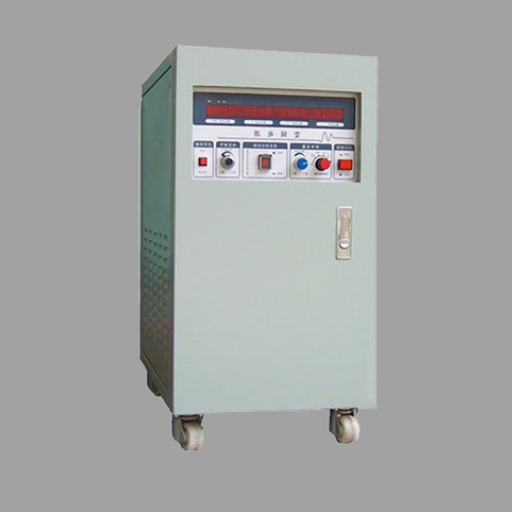
Solid State vs Rotary: Side-by-Side Comparison
| Specification | Rotary Motor-Generator | Solid State Frequency Converter |
|---|---|---|
| Efficiency at rated load | 85-90% | 93-97% |
| Voltage regulation | ±3-5% | ±1% |
| Frequency stability | ±1-3% | ±0.01-0.1% |
| Output THD | 2-5% (degrades with wear) | <1.5-3% (stable) |
| MTBF | 20,000-50,000 hours | 100,000-200,000+ hours |
| Annual maintenance cost (500 kVA) | 9,300−9,300−15,000 | 950−950−1,600 |
| Noise level at 1 meter | 75-90 dB | 55-65 dB |
| Footprint (500 kVA) | 4-6 m² | 1.5-2.5 m² |
| Weight (500 kVA) | 2,500-4,000 kg | 600-1,200 kg |
| Response to load step | 100-500 ms | <20 ms |
| Power flow direction | Fixed | Bidirectional (with AFE) |
| Startup time | 5-30 seconds | <1 second |
| Harmonic filtering | Limited | Advanced (active front end) |
This comparison table consolidates the data most competitors scatter across separate product pages. Use it as a reference when evaluating quotes or presenting upgrade proposals to management. For a detailed comparison of static and rotary converter technologies, see our static converter vs rotary converter analysis.
What to Specify When Buying a Solid State Converter
To capture these advantages in your procurement, specify the following parameters in your technical requirements:
- Efficiency: Request minimum 94% at rated load, with efficiency curves at 25%, 50%, 75%, and 100% load.
- Output THD: Specify maximum 3% total harmonic distortion, measured at rated linear load.
- Voltage regulation: Demand ±1% or better from no-load to full-load, with transient recovery within one cycle.
- Protection features: Require overload, overvoltage, undervoltage, overtemperature, and phase-loss protection with automatic restart capability.
- Cooling: Specify ambient temperature rating, redundancy level for forced-air cooling, and dust filtration if applicable.
- Communication: Request RS-485 Modbus, Ethernet, or CAN bus interface for integration with facility monitoring systems.
- Service access: Confirm that capacitor banks, fans, and control boards are accessible without removing the unit from service.
A procurement manager who includes these specifications in the tender document will receive comparable quotes from all bidders and avoid the low-price trap of undersized designs.
Conclusion
Solid state frequency converter advantages are not incremental improvements. They are fundamental shifts in how power conversion equipment performs, lasts, and costs over time. The combination of 93-97% efficiency, 100,000+ hour MTBF, sub-3% THD, 40-60% smaller footprint, and 85% lower maintenance costs makes solid state the clear choice for new installations and rotary replacements alike.
The only scenario where rotary converters still hold ground is in very specific legacy applications where existing infrastructure, maintenance expertise, or capital constraints prevent change. For every other industrial, aviation, and marine power conversion need, solid state technology has become the standard by which all alternatives are measured.
Ready to specify a solid state frequency converter for your project? Contact Shandong Electric for a technical consultation, efficiency calculation, and competitive quotation built around your exact voltage, frequency, and power requirements.
